
%20(2).png)


Buffalo’s Giant Six-Pack: How Old Grain Silos Became a Waterfront Icon

Along Buffalo’s waterfront, six enormous blue cylinders rise above the Buffalo River, looking less like industrial grain-storage structures and more like a giant package of beer.
The famous Labatt Blue silos at Buffalo RiverWorks are one of Buffalo’s most recognizable examples of industrial history being given a completely new identity. What began as part of the city’s grain-handling infrastructure was transformed into a colorful landmark that connects Buffalo’s industrial past with its modern waterfront entertainment scene.
The six silos stand approximately 100 feet tall, and in 2014 they received their now-famous blue makeover, complete with oversized Labatt Blue graphics. At the time, the project was promoted as one of the largest six-packs in the world.
Before the Blue: Buffalo’s Grain-Handling Heritage

Long before the silos became a colorful attraction, they were part of Buffalo's working waterfront.
The structures were associated with the Wheeler-GLF grain elevator system. Historical accounts trace the site to the Wheeler elevator, which was operating around 1908. The Grange League Federation purchased the elevators in 1929, and the complex was subsequently expanded and renovated.
The GLF C-Annex was constructed in 1936, with six principal bins measuring approximately 100 feet high and 21 feet across. Together, the six bins could hold roughly 154,700 bushels of grain.
At the height of production, the site was capable of tremendous output. A grain mill constructed in 1930 reportedly filled as many as 100 rail cars with hog and cattle feed each day.
For generations, structures like these were essential to Buffalo's identity as a major Great Lakes shipping and grain-handling center.
From Abandoned Silos to a Giant Six-Pack

The industrial site eventually fell quiet.
After GLF merged with other agricultural operations in the 1960s, grain milling and storage activities associated with the Buffalo River site eventually moved to Tonawanda. The property was abandoned by the mid-1970s, leaving its massive industrial structures as reminders of Buffalo's manufacturing and shipping era.
Decades later, those same structures would receive an unexpected second life.
As part of the redevelopment of the former industrial property into Buffalo RiverWorks, Labatt transformed the six silos into a giant visual representation of its signature blue beer. Installation began on September 27, 2014, using enormous blue vinyl panels along with paint. The work was expected to be completed by October 2.
Rather than hiding Buffalo's industrial character, the project embraced it.
The result was impossible to miss.
Six former grain silos suddenly looked like six enormous cans of Labatt Blue standing together beside the Buffalo River.
A Connection Between Buffalo and Labatt
The choice of location was deliberate.
Labatt USA was headquartered in Buffalo, and Buffalo represented the company's largest U.S. market at the time of the original project. Company representatives described the transformation as a way of connecting the brand with Buffalo and its industrial waterfront history.
The location also had a connection to hockey.
The RiverWorks property hosted the Labatt Blue Buffalo Pond Hockey Tournament, helping establish a relationship between the silos, the waterfront and one of Western New York's most recognizable sporting traditions.
The result was more than an advertising installation. It became part of Buffalo's visual landscape.
RiverWorks Brings the Waterfront Back to Life
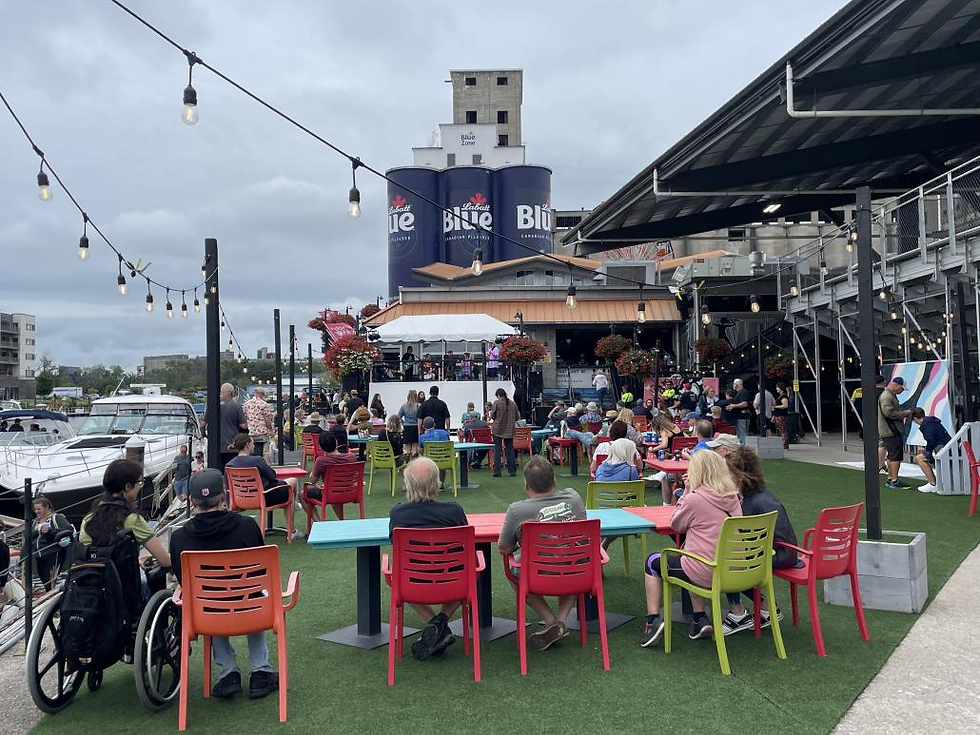
The silos became part of a much larger transformation.
The former industrial property at 359 Ganson Street was redeveloped as Buffalo RiverWorks, an entertainment and sports complex designed to bring new activity to the Buffalo River waterfront.
The original development plans called for approximately nine acres of entertainment space, including restaurants, bars, a beer garden, concert facilities, ice rinks and other attractions. The redevelopment began in November 2013.
Today, RiverWorks describes the property as a year-round destination featuring sports, entertainment, dining and waterfront activities. Its former GLF grain silos have been incorporated into the complex rather than simply being erased from the landscape.
That approach is significant because the industrial structures themselves are part of the attraction.
The Silos Got Another New Life
Perhaps the most interesting chapter in the story came after the six-pack makeover.
The silos weren't simply left standing as giant advertisements. Portions of the old grain-storage structures were eventually adapted for new uses, including the RiverWorks Brewing Co.
According to RiverWorks, its brewery was built inside the former grain silos, with beer traveling directly from tanks to bars on the property. The company describes the operation as the first brewery of its kind built inside a grain silo.
That creates an unusual historical circle.
Grain once entered these structures as part of Buffalo's agricultural and shipping economy. Today, the same structures are associated with brewing, entertainment and tourism.
The building's purpose changed, but its connection to grain and beer remained.
A Symbol of Buffalo's Industrial Reinvention

The giant blue silos are more than an unusual piece of roadside-style Americana.
They represent a broader transformation taking place along Buffalo's waterfront.
Instead of demolishing every reminder of the city's industrial era, RiverWorks incorporated some of those structures into a new destination. The old grain silos became a backdrop for restaurants, sporting events, concerts, ice activities, climbing and other forms of entertainment.
The transformation illustrates how an industrial structure can acquire an entirely new meaning.
Once, the silos represented the movement and storage of grain.
Then they stood abandoned.
Today, they have become one of the most recognizable landmarks along the Buffalo River.
The Giant Six-Pack Lives On

Buffalo's waterfront has changed dramatically over the decades, but the six blue silos remain a highly visible reminder of where the city came from.
The structures that once served the grain industry now stand beside boats, restaurants, entertainment spaces and recreational activities.
RiverWorks' current operations continue to incorporate the old silos, including brewery and event uses. The complex even offers guided opportunities to climb the silos, with current programming describing more than 162 steps to the top and views of the Buffalo waterfront and skyline.
What was once an abandoned piece of Buffalo's industrial landscape has become something entirely different.
It is history, architecture, advertising and entertainment all rolled into one.
And perhaps that's what makes Buffalo's giant six-pack so memorable: the silos were never really erased. They were given another chapter.
From grain storage to abandonment, from industrial relic to giant blue landmark, the six silos have continued to stand over the Buffalo River — a towering reminder that sometimes the best way to preserve a city's past is to find a new purpose for it.
The grain may be gone, but the silos still have a story to tell.


Comments